
For the Chief Lending Officer
The exception made sense in March. Nobody can explain it in November.
Your team grants exceptions every week — pricing, covenant, LTV, debt service, policy. Each one is defensible when it's made. The problem is what survives of the reasoning.
What happens today
A relationship manager prices below matrix to hold an account. Good call — the depository relationship justified it, the sponsor had three performing deals, and the guarantor was strong.
None of that is written down. What's written down is the rate.
Eight months on, the loan comes up for renewal. The RM has moved to another institution. Credit sees a below-matrix rate with no stated reason and prices the renewal back to matrix. The borrower moves the relationship. You lose a good account because the reasoning didn't survive the person who had it.
What changes
- Exceptions carry their reasoning. Rate, term, covenant, LTV — each carries the basis at the moment of approval, structured so it can be searched later, not buried in a memo.
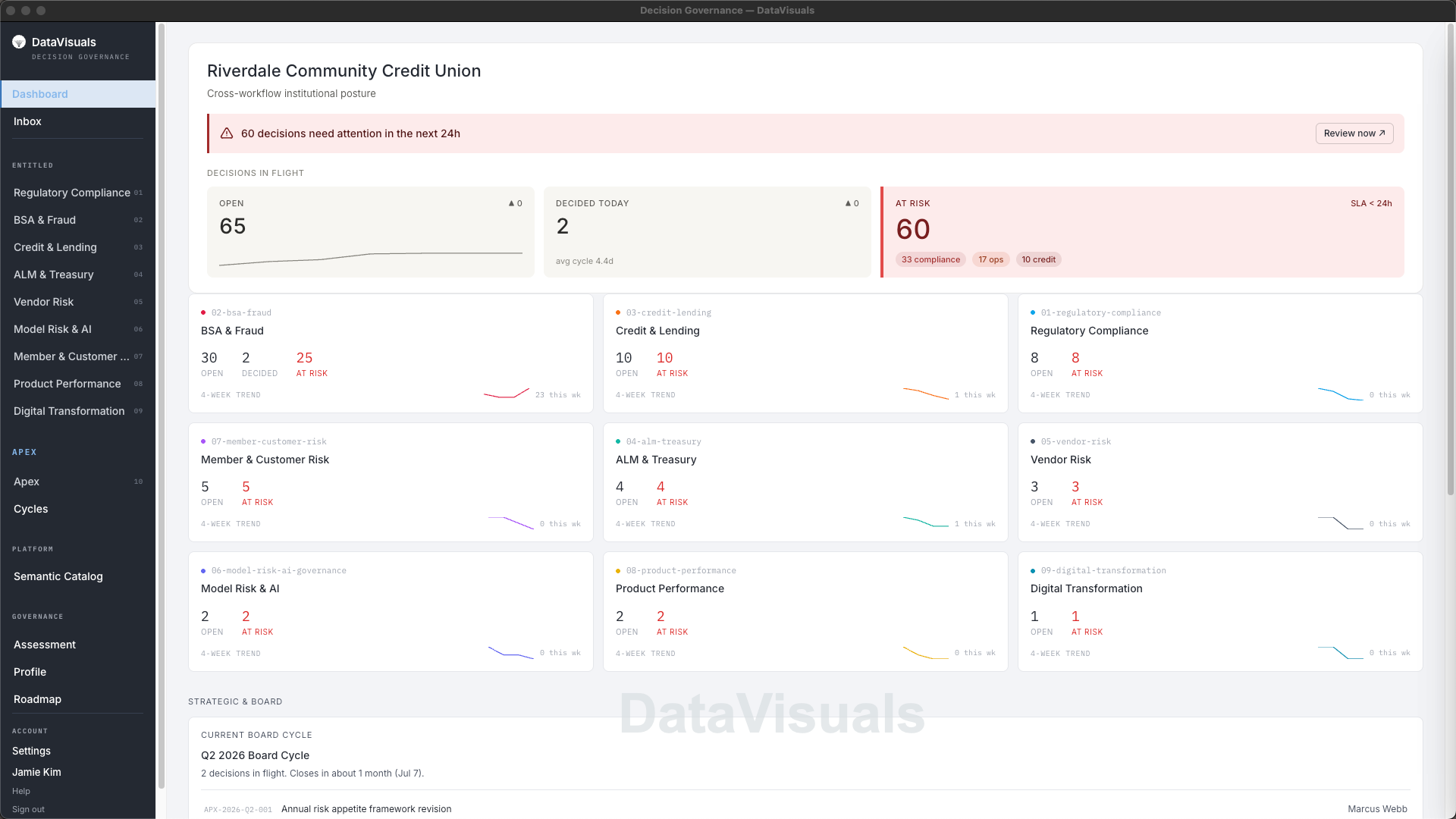
- Patterns become visible. Which officers grant exceptions, in which product, how often, and — this is the part nobody has — how those loans actually performed.
- Renewals inherit the file. The person handling the renewal sees why the original terms were set before they reprice.
- Pricing discipline becomes measurable. Not “are we granting too many exceptions.” A real answer: which exceptions paid off and which didn’t.
What you’d actually see
Not your question? See the Chief Operating Officer view